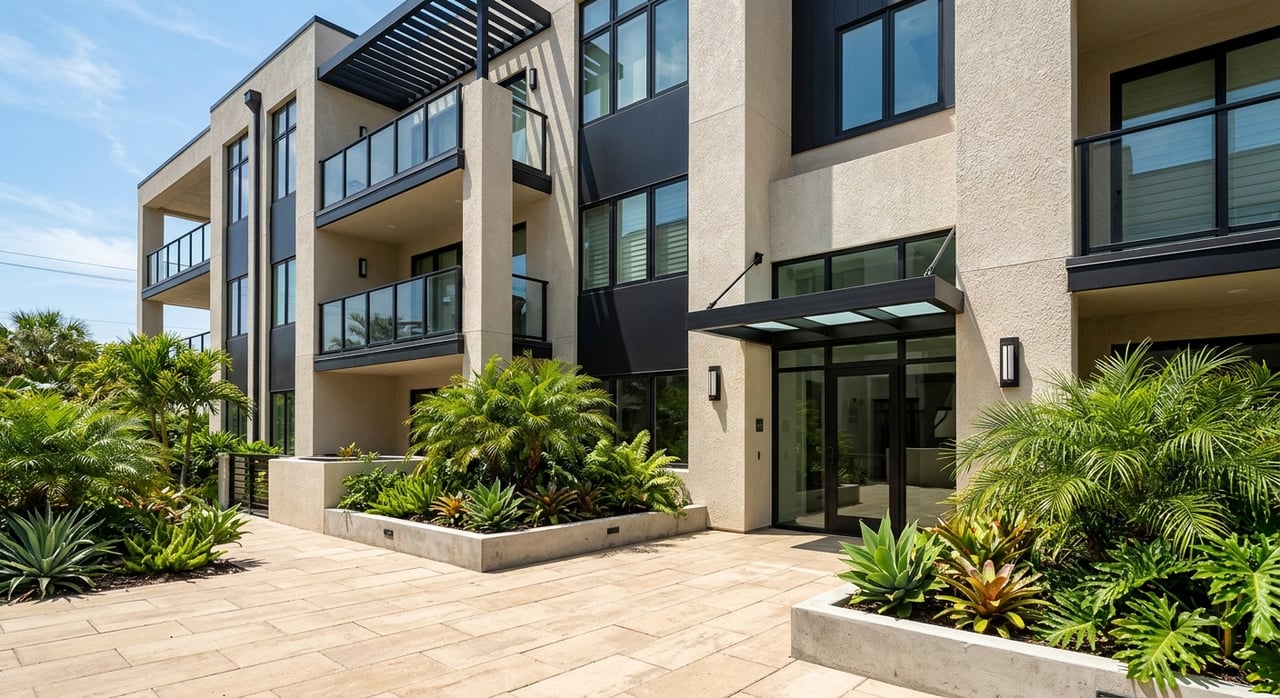
Owning a Condo on Siesta Key: Lifestyle, Fees and Expectations
July 2, 2026
July 2, 2026
If Siesta Key condo ownership sounds like an easy beach escape, you are not wrong. But it also comes with rules, fees, weather planning, and building details that can surprise buyers who only focus on the view. If you are thinking about a full-time move, a seasonal place, or a second home, this guide will help you understand what daily life, condo costs, and ownership expectations can really look like on Siesta Key. Let’s dive in.
Owning a condo on Siesta Key often means you are buying into a beach-centered lifestyle, not just a property. Your day may revolve around walkable beach access, nearby dining, trolley stops, and how easily you can get around without constantly moving your car.
That matters because beach access on the key is plentiful, but parking is not consistent from one access point to another. Sarasota County shows that some access points have no parking, some are pedestrian-only, and some have very limited ADA parking. In practice, that makes a condo’s location and access pattern especially important.
Sarasota County’s Route 77 Siesta Islander trolley runs daily from 8 a.m. to 10 p.m. It connects downtown Sarasota, Siesta Key Village, Siesta Beach, South Village, and Turtle Beach, and the county says it is designed to reduce traffic congestion on the island.
For many owners, that trolley becomes part of everyday life. If you want a more car-light routine, being near a trolley route can make trips to the beach, the village, or other parts of the key much easier.
Not every part of Siesta Key lives the same way. Sarasota County describes Siesta Beach as a destination beach, while Turtle Beach Park is known for a quieter setting with a boat ramp, kayak launches, a fishing pier, picnic areas, restrooms, and swimming.
That means your ownership experience can vary based on where your condo is located. Some buyers want to be close to the activity near Siesta Beach and the Village, while others prefer the calmer feel near the south end of the key.
Even in a relaxed setting, practical details matter. County lifeguards staff Sarasota County beaches year-round from 10 a.m. to 4:45 p.m. daily, which helps define the rhythm of beach use for many owners.
If you are relocating from out of state or buying a second home, it helps to think through your actual routine. Ask yourself how often you want to walk to the beach, whether you want trolley convenience, and how much activity you want nearby during busier parts of the year.
A Siesta Key condo can offer lower-maintenance living than a single-family home, but that does not mean fewer responsibilities. In a Florida condo, the declaration, bylaws, and rules govern how the property is used, including important details about daily living and leasing.
As a buyer, you have the right to review core documents, the association’s question-and-answer sheet, and year-end financial information. Associations must also make official records available within 10 working days after a written request.
Regular assessments fund common expenses and must be collected at least quarterly. Those dues generally support shared upkeep and operations for the building and common areas.
That is the basic framework, but the condo documents still control many parts of ownership. So while monthly dues may handle shared expenses, they do not tell you everything you need to know about the building or how you can use the property.
A special assessment is different from your regular condo dues. It is a separate charge for expenses that are not included in the association’s adopted budget.
Florida guidance says the association must give at least 14 days’ notice of any meeting where a special assessment will be considered. That makes it important to review not only current fees, but also the building’s financial planning and upcoming capital needs.
Many buyers start by comparing monthly condo fees. That is understandable, but on Siesta Key, the lowest fee is not always the safest or most affordable long-term option.
A better question is what the fee is funding. On barrier islands and in older or taller condo buildings, reserves, inspections, maintenance, and insurance all play a major role.
Florida’s condo reserve rules now have a major impact on ownership costs. Associations must budget reserve accounts for capital expenditures and deferred maintenance.
For residential condo buildings that are three stories or higher, the Structural Integrity Reserve Study includes items such as the roof, structure, fire protection systems, plumbing, electrical systems, waterproofing, exterior painting, and windows and exterior doors. Reserve funds identified in that study cannot be waived or reduced by owner vote.
This is one reason fees may be higher than a buyer expects. In many cases, higher dues may reflect more realistic planning for future repairs and replacement work.
For condominium buildings three stories or more, Florida law requires milestone inspections when the building reaches 30 years of age and every 10 years after that. The inspection reports and reserve studies are part of the association’s official records and must be provided to potential purchasers.
If you are considering an older condo on Siesta Key, these records are essential. They can help you understand the building’s condition, upcoming projects, and whether future costs may already be visible.
Special assessment money must be spent only for the purpose stated in the notice, and associations must keep financial records showing special assessments separately from normal budgeted expenses. From a buyer’s perspective, that makes context important.
A building with low monthly fees may look attractive at first glance. But if reserves are thin and major projects are ahead, that lower fee may not tell the full story.
On Siesta Key, insurance is not just a line item. It is part of the reality of owning property on a barrier island.
Sarasota County says the area is susceptible to coastal, riverine, and urban flooding caused by heavy rains, tropical storms, hurricanes, and storm surge. The county also notes that most homeowners insurance does not cover flood damage.
Flood policies through the National Flood Insurance Program can be purchased, but Sarasota County notes there is typically a 30-day wait before coverage takes effect. If flood coverage may be part of your ownership plan, timing matters.
This is especially important for second-home buyers and relocating buyers who may be used to very different insurance conditions. On Siesta Key, you want to understand insurance expectations early, not after you are under contract.
Many buyers assume a beach condo will automatically be rental-friendly. On Siesta Key, that can be a costly assumption.
Sarasota County says homes may be rented whole for periods longer than 30 days, but on barrier islands only properties zoned RMF can be rented for less than 30 days. Florida law also requires disclosure materials to state leasing restrictions, assessment amounts, and any recreational or commonly used facility fees.
Whether a condo works for your rental goals is usually a building-by-building question. You should verify the minimum lease period, approval procedures, and whether the association documents allow the type of rental use you want.
That matters whether you plan to rent occasionally, seasonally, or not at all. Even two condos with similar views and similar prices can come with very different ownership rules.
Siesta Key can feel very different in winter than it does in summer. Sarasota County estimates about 487,640 permanent residents in 2025, but says the winter population can rise above 570,000.
For condo owners, that often means a busier winter season and a hotter, wetter summer. The National Weather Service describes June through September as the local rainy season, which adds another layer to the annual rhythm.
Because Siesta Key is on a barrier island, Sarasota County evacuation guidance says residents in barrier islands and other low-lying areas should evacuate when conditions warrant. The county also notes that coastal roads may be underwater well before a storm arrives.
If you are buying a seasonal property, it helps to think of ownership as weather-aware and hands-on. A Siesta Key condo can be a wonderful lifestyle fit, but it is not something to approach as a completely passive vacation asset.
Before you move forward with a condo on Siesta Key, focus on the details that shape your real ownership experience, not just the photos or monthly dues.
A smart review checklist includes:
When you look at the full picture, you can match the condo to the lifestyle you actually want. That is the key to making a confident decision on Siesta Key.
If you are weighing condo options on Siesta Key and want help comparing lifestyle, building rules, and ownership costs, Sarasota Neighborhood Experts can help you make sense of the details and find the right fit.
Stay up to date on the latest trends in real estate.
August 27, 2026
August 20, 2026
August 13, 2026
August 6, 2026
August 6, 2026

July 23, 2026
July 16, 2026
July 9, 2026
July 2, 2026
Sarasota Neighborhood Experts will help you achieve or exceed your real estate goals, by providing you with extraordinary quality of service in the buying and selling of real estate. Professionalism, integrity, honesty, and truth are the cornerstones of our business.